WHERE AI ENGINEERS LEVEL UP
Build AI systems, not just prototypes.
Featured Courses
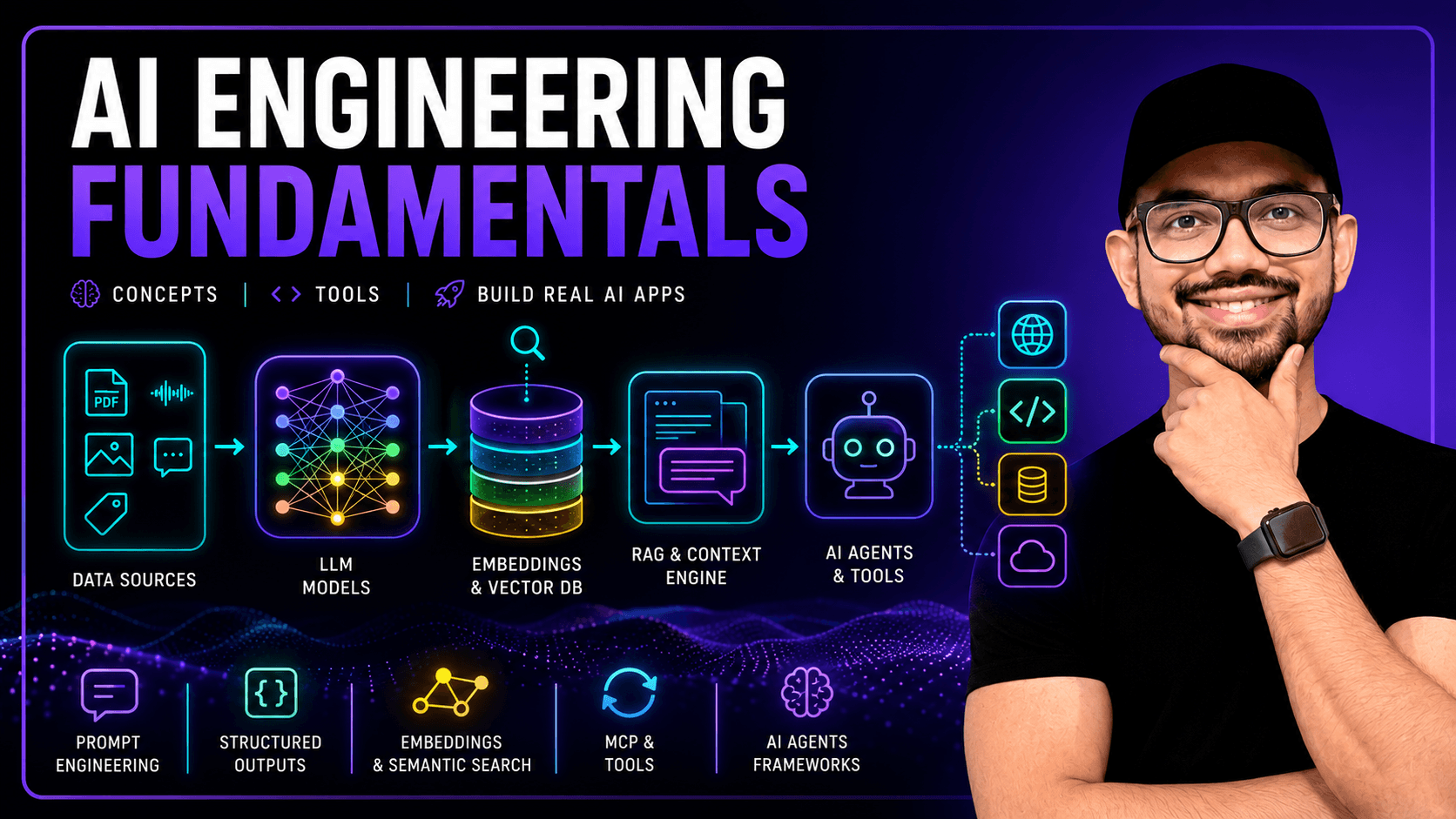
AI Engineering Fundamentals
The demand for AI Engineers has exploded, but many developers struggle to understand how the different pieces of the AI ecosystem fit together. This course is designed to give you a strong conceptual foundation in AI Engineering without overwhelming you with unnecessary theory. You'll begin by understanding what an AI Engineer actually does and how Generative AI is transforming software development. From there, you'll explore Large Language Models (LLMs), how they work, their lifecycle, and how to choose the right model for different use cases. Next, you'll master Prompt Engineering by learning the building blocks of effective prompts, including system prompts, user prompts, context, and output instructions. You'll also understand tokens, context windows, structured outputs, and proven prompting techniques used in real-world applications. The course then dives into Retrieval-Augmented Generation (RAG), embeddings, semantic search, and the Model Context Protocol (MCP), explaining how AI applications access external knowledge and interact with tools. Finally, you'll learn what AI Agents are, how they differ from traditional workflows, and explore the most popular agent frameworks used to build autonomous AI systems. By the end of this course, you'll have a clear mental model of modern AI Engineering and be ready to start building production-ready AI applications or continue with more advanced topics. Whether you're a software engineer, backend developer, DevOps engineer, student, or tech enthusiast, this course will give you the knowledge needed to confidently enter the world of AI Engineering.
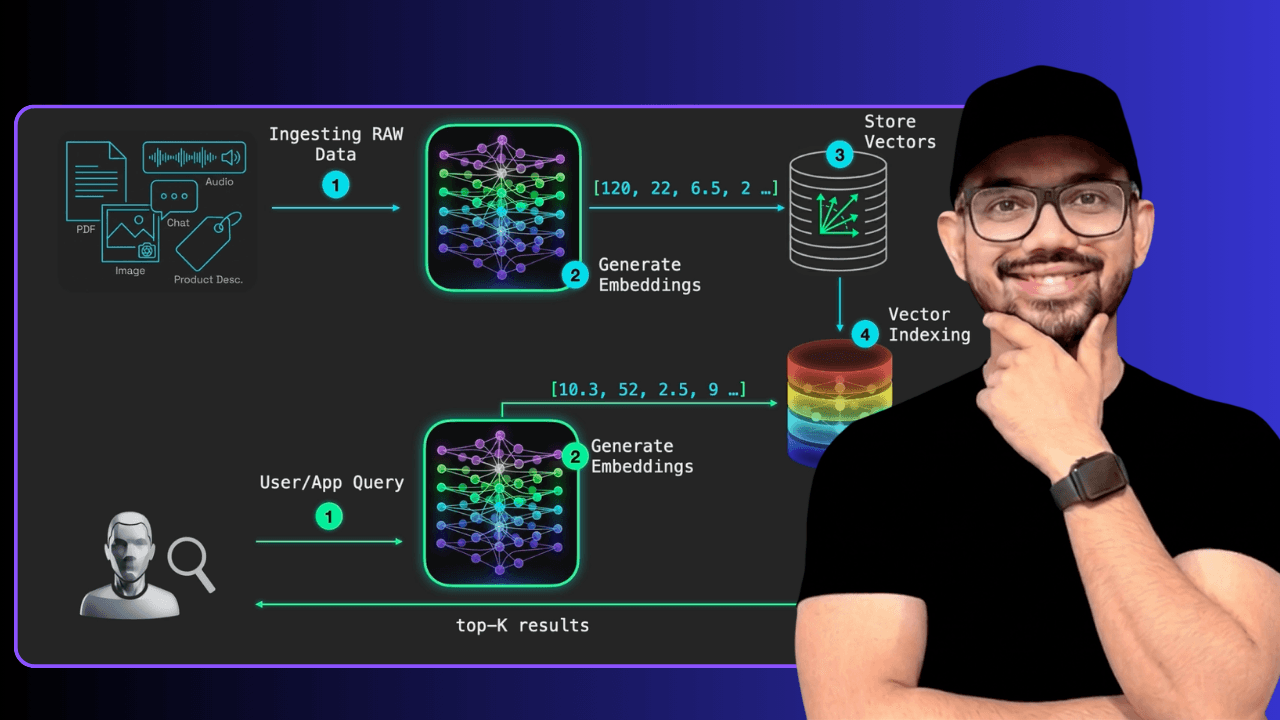
Vector Databases Masterclass: From Zero to Advanced
Vector Databases have become one of the most important technologies powering modern AI applications. Whether you're building AI agents, RAG applications, recommendation engines, semantic search systems, or enterprise knowledge bases, understanding Vector Databases is no longer optional—it's an essential skill for software engineers, AI engineers, and machine learning practitioners. In this comprehensive course, you'll learn Vector Databases from the ground up. No prior knowledge is required. Every concept is explained step by step, with intuitive visual explanations and practical demonstrations. We'll begin by understanding what Vector Databases are, why they were introduced, and why traditional databases struggle with semantic search. You'll then learn the mathematical foundations behind vectors and vector similarity before exploring tokenization and embeddings—the building blocks of modern AI systems. Next, you'll generate embeddings using Google's Gemini Embedding model and dive deep into the internal architecture of Vector Databases, including storage, indexing, similarity search, and scalability techniques used in production systems. Finally, you'll build a complete hands-on project where you'll generate embeddings, store them inside ChromaDB, and perform semantic search, giving you a practical understanding of the entire vector search pipeline. By the end of this course, you'll not only understand how Vector Databases work conceptually but also gain the practical skills required to build AI-powered applications that leverage semantic search and embeddings. Whether you're a Software Engineer, AI Engineer, Machine Learning Engineer, Data Engineer, or simply curious about modern AI infrastructure, this course will give you the confidence to work with one of the most important technologies in today's AI ecosystem.